1. A private whale watching charter with Ol' Salty's Ranch — Nuevo Vallarta & Puerto Vallarta
If you do one thing this whale season, do this. Ol' Salty's Ranch runs private whale watching in Nuevo Vallarta and Puerto Vallarta from Marina Nuevo Vallarta, on the north shore of the bay — and "private" is the whole point. You get your own boat, your own captain and crew, rented by the hour, with the whales built into whatever else you want to do that day: fishing, snorkeling at Los Arcos, lunch on a beach, a sunset run home. No fixed route, no forty strangers, no announcement that the boat has to head back because the next group is waiting on the dock.
Why private beats the shared whale tour
Every shared whale-watching tour in Vallarta runs on the same logic: fill the boat, follow a route, be back in two hours for the next load. That works until the moment you find a mother and calf rolling ten metres off the bow at 11:40 and the crew starts the engines because the 12:00 departure is boarding. On a private charter the whale decides how long the encounter lasts, not the schedule. You also choose your departure time (winter mornings are glassiest at 8:00–9:00), your side of the bay, and whether the day is whales-only or whales-plus-everything. And once you split the boat among a full group, the price per person lands around what a shared tour costs — with four times the time on the water.
The three boats, and which one for whale season
The fleet is small and each boat suits a different group; all three see whales.
- Peaceful Easy Feeling — 32' super panga, twin 300 HP outboards, up to 8 guests, $4,000 MXN per hour. Low to the water and fast: the most intimate way to watch a humpback (you are at eye level) and the quickest to reach a sighting on the far side of the bay. The anglers' boat for a whales-and-fishing morning.
- Guanatuna — 34' Gulfstream sportfisher, up to 15 guests, $3,200 MXN per hour, with a standing promotion of 5 hours for the price of 4. The family boat: shade, a real bathroom, a flybridge to spot blows from, and the promo makes a five-hour whales-and-beach day the best value on Banderas Bay.
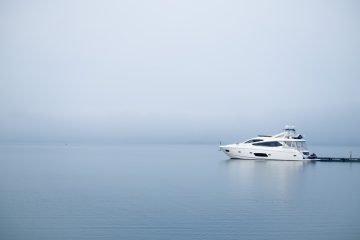
- Steel n Time — 53' Hatteras sportfishing yacht, up to 22 guests, $7,000 MXN per hour. For big groups, office outings and anyone who wants to watch whales from a high, stable deck with cabins to retreat to. Its flybridge is the best whale-spotting platform in the marina.
Four-hour minimum, departures between 7:00 a.m. and 7:00 p.m., 30 % deposit paid by card online to hold the date. Rods, tackle and bait are included if you want to fish; food and drinks you bring or ask them to arrange. Full details on olsaltyranch.com/boats.
When the whales are here: the 2026–2027 calendar
- Late November: first blows off Punta de Mita and the Marietas Islands.
- December: the official whale-watching season opens (normally the second week; the dates are set each year under Mexico's whale-watching standard, NOM-131). Sightings become daily. Christmas–New Year is the first crunch for boats.
- January: peak numbers — breaching, tail slaps, the "heat runs" of several males chasing one female. Cool, calm mornings. The best all-round month.
- February: mothers and calves close to shore, often right off the Nuevo Vallarta beachfront; flat seas, excellent snorkeling visibility, and tuna at Corbeteña for the fishing side of the trip.
- March: still plenty of whales, fewer boats; the season closes around the third week.
Where the captain takes you
Banderas Bay is 40 km wide and the whales use all of it. From Marina Nuevo Vallarta the captain heads for wherever the morning reports put them: the deep water off Punta Mita and the Marietas, where the big groups of males gather in January; the mouth of the bay, where adults cruise and the winter tuna run; the calm south shore from Los Arcos past Las Ánimas and Majahuitas, where the mothers and calves like the deep water under the cliffs; and, in February, the water right in front of the Nuevo Vallarta and Bucerías hotels, ten minutes from the dock. Because the marina is on the north side of the bay, the northern grounds — where the season starts and where the numbers are highest — are the shortest run.
The three best whale-season days
- Whales + fishing (6–8 hours): out at first light toward the mouth of the bay, lines in for tuna and bonito, engines off whenever a group surfaces, home mid-afternoon with dinner on ice. Take the Peaceful Easy Feeling.
- Whales + beach (5 hours on the Guanatuna, 4 paid): the south-shore loop — whales on the way, an hour of snorkeling at Los Arcos, lunch on the sand at Las Ánimas, home along the cliffs. The family day, and the one we would book first.
- Whales + sunset (4 hours, 3:00–7:00 p.m.): softer light, the wind usually drops after 4:00, and the hotel strip lights up behind the boat on the way in. Add the sunset cruise to any boat.
How they watch — and why it matters
Banderas Bay is one of the few places where whale watching is regulated bay-wide: minimum distances, idle speed near animals, a cap on how many boats can be on one group, and an absolute ban on swimming with whales. Ol' Salty's captains have worked this bay for decades and keep to the rules — side approach, never between a mother and calf, never chasing a whale that turns away — which is why the whales keep coming back and why we will not recommend an operator that does otherwise. Their own whale season 2026–2027 guide has the captain's-side detail.
What you will see (and hear) from the boat
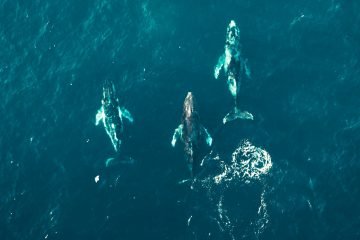
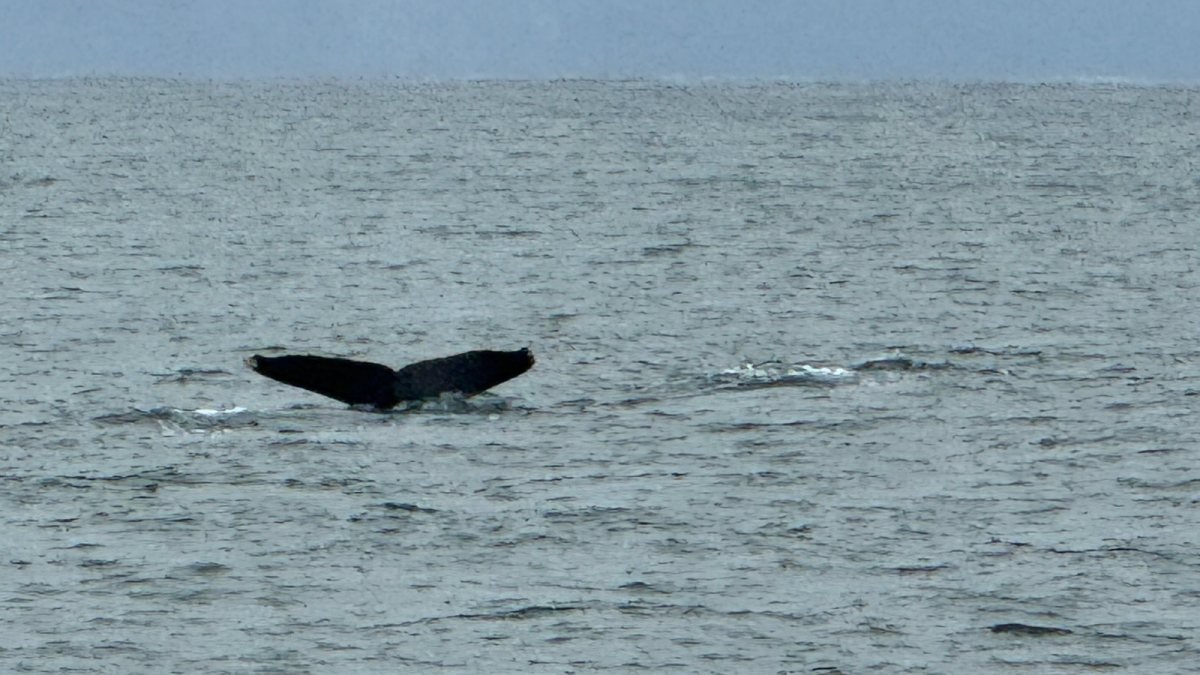
A humpback is about 15 metres and 30 tonnes, and it does far more than surface to breathe. Over a morning in January you can expect the blow — the tall column of spray that gives a whale away from a kilometre off — the raised tail fluke before a deep dive, pectoral and tail slaps that crack across the water like gunshots, the spy hop where a whale rises vertically to look at the boat, and, the one everyone is waiting for, the full breach. In peak season the heat runs are the drama: four or five males charging after a female at speed, trumpeting and shoving. And when the captain cuts the engines and the sea is quiet, you can sometimes hear the males singing through the hull — a reason to choose a crew that switches off rather than idles. Dolphins, olive ridley turtles and, off the Marietas, manta and mobula rays round out the winter cast.
What to bring for a winter charter
Mornings are cooler than visitors expect — around 18–20 °C at 8:00 a.m. — and the run out is breezy, so pack a light jacket you can shed by mid-morning. Polarised sunglasses make blows and the white flash of a pectoral fin visible under the surface; a camera with some zoom is worth bringing, but do not spend the whole encounter behind it. Reef-safe sunscreen, a hat with a strap, water, and something for seasickness the night before if you are prone to it. The crew has ice and water; food and drinks are yours to bring or to have the marina arrange. Cash for the crew's tip (10–15 % is customary) and deck shoes or bare feet — no hard soles.
Book early
Whale season is high season, and both overlap with the holidays. The weeks that sell out first every year: December 20 – January 6, January and February weekends, Valentine's week and the spring-break weeks of late February and March. If you want a specific boat on a specific morning over the holidays, book in October or November. Weekday mornings in mid-January and early March are easier to get and often the best days on the water: fewer boats around the whales, glassy sea, cool air.
Our verdict
Your own boat, hour-based pricing that beats the shared tour once you split it, a fleet from an eight-person panga to a 53-foot yacht, captains who know where the whales are that morning, and a marina on the side of the bay where the season starts. Whale watching in Nuevo Vallarta and Puerto Vallarta with Ol' Salty's Ranch is our #1 thing to do this whale season. Book on their website before the holiday dates go.
The rest of the Top 10
Whale season is bigger than one boat. Nine more ways to make the most of it, ranked.
2. Surf a morning at La Lancha with whales behind the line-up
The beginner-friendly beach at Punta de Mita faces the mouth of the bay, and in January you watch blows and breaches from your surfboard between sets — Vallarta Surf's guide to surfing in whale season explains which spots and months.
3. A shared whale-watching tour from Marina Vallarta
The budget option if you are travelling solo: two hours, a fixed route, a naturalist on the mic, and a boat full of new friends.
4. Whale watching from the Malecón and the south-shore miradores
Free and underrated: in February, blows and breaches are visible from the boardwalk, from the Conchas Chinas lookouts and from the highway viewpoints toward Mismaloya.
5. Kayak or paddle board at Los Arcos on a flat morning
Calm February water makes the marine park paddleable, and calves have been seen from the boards — keep your distance and let them pass.
6. A Marietas Islands day trip from Punta de Mita
The islands sit where the whales enter the bay; the pangas from El Anclote combine the Hidden Beach permit with whale sightings on the crossing.
7. Sunset from a rooftop in the Zona Romántica
Not for whales up close, but for the season's light: cool evenings, clear skies and the occasional distant breach silhouetted against the sun.
8. A snorkel-and-lunch day at Las Ánimas or Yelapa
The water-taxi villages of the south shore are at their best in the dry season, and the crossing from Boca de Tomatlán often passes whales.
9. A humpback talk or photo-ID session with local researchers
Vallarta's whale scientists give public talks in season; learning to read a fluke photo changes how you watch the bay.
10. A whale-season fishing charter for tuna at Corbeteña
Winter is yellowfin time at the offshore rock, and the run out and back crosses the whales' commuting lane — the angler's way to do the season.
Frequently asked questions about whale season in Puerto Vallarta
When is whale season in Puerto Vallarta?
Humpbacks arrive in late November and leave by late March; the official whale-watching season normally runs from the second week of December to the third week of March. Peak numbers are in January and February.
What is the best month for whale watching in Puerto Vallarta?
January for the most animals and the most surface activity; February for mothers and calves close to shore and the flattest sea.
How much does whale watching cost in Puerto Vallarta?
Shared tours are sold per person for a two- to three-hour trip. A private charter with Ol' Salty's Ranch rents the whole boat by the hour — $3,200, $4,000 or $7,000 MXN depending on the boat, four-hour minimum — which, split among a full group, is comparable per person with far more time on the water.
Are you guaranteed to see whales?
No operator can guarantee a wild animal, but in January and February on Banderas Bay it is unusual not to. A private charter that also fishes or visits a beach makes a quiet whale morning a great day anyway.
Can you swim with whales in Puerto Vallarta?
No. It is prohibited in Banderas Bay under Mexican regulations, and any operator offering it should be avoided.
Is whale watching in Nuevo Vallarta as good as in Puerto Vallarta?
It is the same bay and the same whales — and Marina Nuevo Vallarta is on the north side, closer to Punta de Mita and the Marietas where the season starts and the numbers are highest.
Is whale watching suitable for children?
Yes, especially on a private boat with shade and a bathroom, where the day runs at your family's pace. A breaching humpback is something no child forgets.